
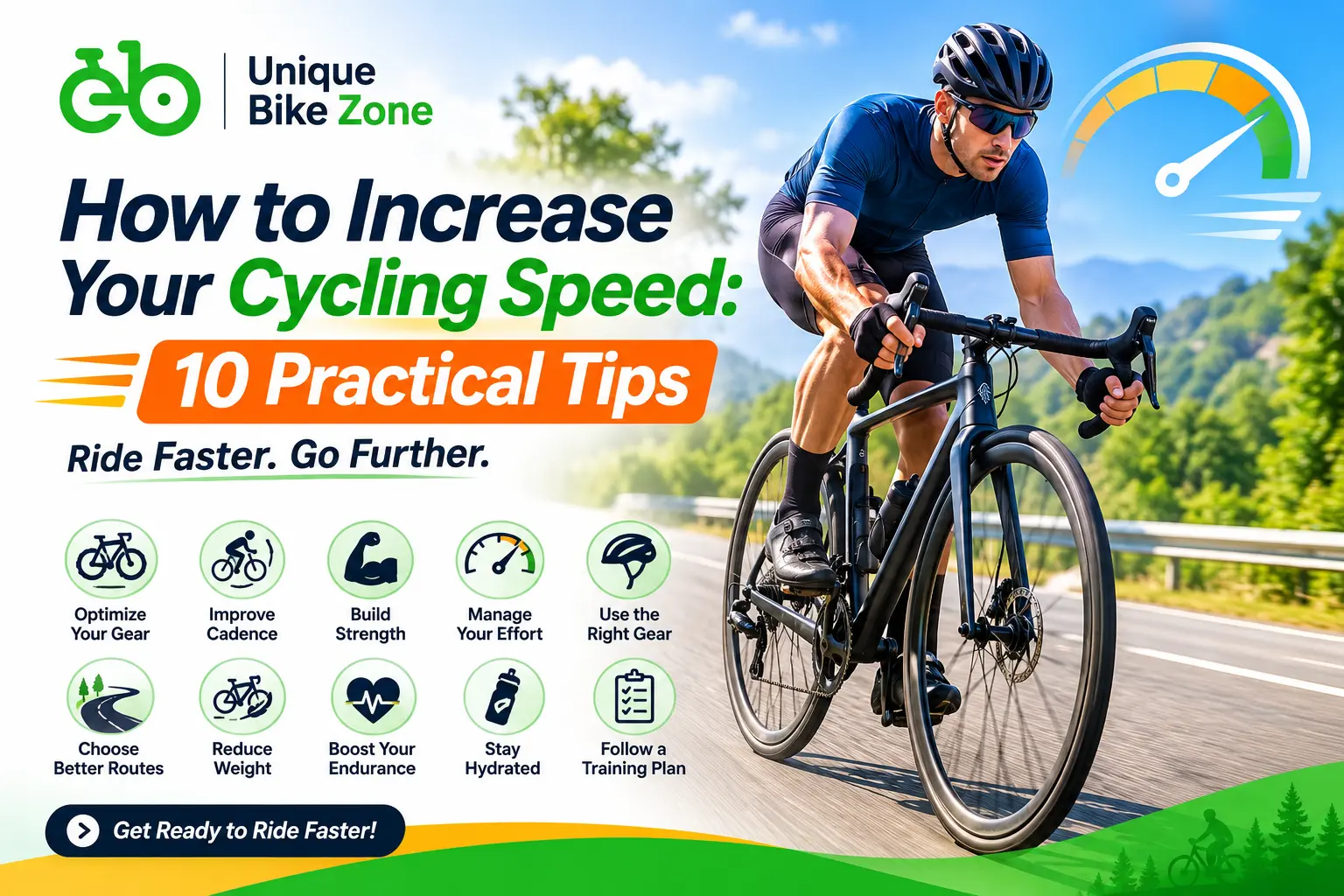


Speed is the main currency of cycling. Whether you’re out there trying to beat the time on a local run or just want to keep up with the fast group on a Saturday morning, it’s all about the speed. It’s a race against the clock as much as it is a race against your own body.
A faster pace isn’t simply about pedalling harder until you’re winded. It’s about a combination of aero, mechanical efficiency and structured training.
By getting to grips with how to balance these variables you can achieve massive performance gains without necessarily having to spend thousands on a new carbon frame. This guide looks at how to go faster and 10 practical tips to take you from a fairly casual rider to a much more potent and efficient athlete.
Why is it important to be improving your average cycling speed?
Focus on your average speed and that’s one of the most honest ways of tracking your development as a cyclist. Top speed is a nice metric for a sprint really, but your average speed over a 50km ride is the one that actually tells you the story of your fitness and your technical ability. The more you can increase that number the more efficient you are, the more ground you can cover in the same amount of energy. That’s the difference between finishing a century ride feeling fresh and finishing it completely drained.
Beyond the physical benefits there’s a huge psychological benefit in just seeing your metrics go up. The sheer motivation that comes from tracking your rides and seeing your baseline pace go up by 1 or 2 km/h is what keeps you going with a plan. It makes the whole idea of fitness real, it makes it tangible. A faster pace also enables you to do routes that you simply wouldn’t have thought you could have done before, routes that would have been too long to do in daylight.
Building Cardiovascular Endurance for Long-Term Gains
A faster average pace is all down to a good heart and good lungs. Improving your aerobic capacity means your heart is more efficient at pumping oxygenated blood to your working muscles. This in turn allows you to sustain a higher power output for longer without ever actually entering your anaerobic zone (where you go from being aerobic to being anaerobic and fatigue sets in very quickly). The longer you train in the aerobic zone, the more your ‘engine’ is expanded and the more your previous top end speeds will start to feel like a relaxed cruising pace. The data from the recent training is very clear on this: the best long term performance gains are achieved by a combination of steady endurance work and high intensity work.
The Role of Efficiency in Bicycle Performance
Speed isn’t just about raw power. It’s about minimising the energy you’re wasting fighting against the external forces (wind resistance, friction etc). If you’re putting out 200 watts of power and 20 of that is lost to a dirty chain and another 30 to a baggy jacket, you’re actually working 25% harder than you need to. Getting your bike right is about looking at the bike and the rider as one unit. A smooth pedal stroke and a well set up bike will ensure that every watt you put into the pedals is going to move you forward rather than being lost as heat and vibration.
How can you optimise your body position for speed?
The single biggest thing holding you back from cycling fast is wind resistance. Once you’re above 20kph the vast majority of your effort is going into pushing air out of the way. The human body is not naturally aerodynamic so your position is the single most important thing you can adjust to reduce drag.
1. Mastering the Aerodynamic Tuck
To reduce wind resistance you need to reduce your frontal area. The best way to do this is to get your torso down to the handlebars. Move your hands from the top of the bars down to the drops (the lower curved section of the road bars) and tuck your elbows in. You can reduce your drag by as much as 20% in this way. Research suggests that bending your back and keeping your head down is a lot more effective for getting faster when cycling than spending money on expensive aero wheels. It costs nothing to change your position and the speed gains are instant and significant.
2. Improving Core Strength to Maintain Form
You can’t maintain an aerodynamic tuck with an unstable body. A weak core leads to a rocking hip and a shrugging shoulder which is the ultimate energy waster and completely disrupts your streamline. A strong core (abs, obliques and lower back) enables you to hold that low aggressive position for hours rather than just minutes. It also gives you a solid platform for your legs to push off. If your torso is rock solid then all the force your quads and glutes generate is going into the drivetrain rather than being eaten up by a wobbly upper body.
What training techniques improve cycling speed and performance?
Riding at the same steady pace every day will of course eventually lead to a plateau. To get faster you have to stress the body in different ways in order to force it to adapt and become stronger.
3. Incorporating Interval Training for Power
HIIT is by far the quickest way to get your FTP up. It’s simply short intervals of all-out effort followed by a very short recovery. A typical session might be two minutes of all-out effort at 90% of your max heart rate, followed by two minutes of easy spinning to recover. You’d do that cycle four or five times. The principle is that you’re teaching your body to clear lactic acid much more efficiently and therefore to produce more power at the top end. It’s one of the best ways to ride a bike faster as it prepares you for the sudden bursts of speed you’ll need on the climbs and in the sprints.
4. Utilizing Cadence Drills to Build Efficiency
Lots of novices go in and “mash” the gears i.e. they go into a heavy gear and just push it at a very low RPM. It feels very powerful, but it’s absolutely terrible for your legs and you’ll be completely winded very quickly. The trick is to go into a lighter gear and work at a higher cadence (85-95 RPM is the target). Cadence drills involve going into a light gear and just focusing on a smooth circular pedal stroke. That shifts the load from your muscles to your cardio and your cardio recovers a hell of a lot quicker. Learning to spin is the key to being able to go at a high speed for a long distance without your legs giving up.
5. Group Riding and the Art of Drafting
You can increase your speed by 5 to 10kph simply by riding in a peloton or even just with one other person (drafting). This is all down to drafting, which is the practice of riding in the slipstream of the rider in front of you. The rider at the front is doing all the work of breaking the wind and the ones behind can save up to 30% of their energy. It’s a skill that requires a lot of trust and communication to master, but it’s absolutely essential if you’re looking to go any faster on your bike. By rotating who is at the front you can maintain a much higher average speed than you could as a solo rider.
Which equipment adjustments will help you ride a bike faster?
Your fitness is the engine, the bike is the machine. A few small mechanical tweaks can make a massive difference in terms of rolling resistance and friction and you’ll get “free” speed as a result.
6. Optimizing Tire Pressure for Different Surfaces
Tire pressure is a balancing act between speed and comfort. Too soft and you’ve got increased rolling resistance and you’re going to feel like you’re dragging. Too hard and the bike will bounce off every pebble which in turn will slow you down and lead to fatigue. On smooth pavement a higher pressure is generally better, on the rougher roads you can actually go faster by reducing your pressure by 5 or 10 PSI, the idea being that the tire can absorb the vibrations. It’s always worth checking your pressure before every ride as it will ensure you’re in the right spot for your weight and tyre width.
7. Maintaining a Clean and Efficient Drivetrain
A dirty, grimy chain is a silent speed killer. The friction from the dirt and old grease is going to be taking 5 to 15 watts out of your system. That’s power you’re generating but never getting to the road. Regular degreasing and re-lubing with a good quality lube is one of the easiest things you can do to go faster. A clean drivetrain will make you go faster and will also extend the life of your expensive bits. If you can hear your chain chirping or grinding then you’re losing speed. A silent bike is almost invariably a fast bike.
How do nutrition and recovery impact your top speed?
You can’t expect any kind of high performance from a body that’s underfueld or overworked. Speed is built in the kitchen and the bedroom as much as it is on the road.
8. Fueling with High-Performance Carbohydrates
To sustain a high speed you need a constant supply of glucose. For any ride over 90 minutes you should be looking at 30 to 60g of carbs per hour. That can be in the form of energy gels, sports drinks or simple snacks like a banana. Fueling before you actually get hungry is the key to avoiding bonking (that point where your glycogen stores are completely gone and your speed just drops off a cliff). Hydration is just as important as fueling, as even a slight degree of dehydration will see your heart rate go up and your power go down.
9. Prioritizing Rest to Allow for Physiological Adaptation
Training makes you tired, rest makes you fast. Doing hard intervals or long endurance rides creates micro-tears in your muscle fibres. It’s during the recovery period that the body actually repairs the damage and the fibres become stronger and more resilient. If you don’t have any rest days you’re going to be in a state of chronic fatigue and your speed will eventually plateau or go backwards. The professionals will tell you sleep is their number one recovery tool and they’ll aim for 8 to 9 hours to maximise the release of growth hormone which is what actually does the repairing.
What mental strategies differentiate the fast cyclists?
The physical ability to go fast is often constrained by the mental ability to tolerate discomfort. It’s the mental toughness that enables you to keep going when your legs are screaming at you to stop.
10. Setting Incremental Goals for Constant Improvement
Success in How to Increase Your Cycling Speed: 10 Practical Tips is all about data. Use a bike computer or a smartphone app to set your own specific, achievable goals. Rather than trying to get 5km/h faster in one go, set yourself a target to increase your average speed by 0.5km/h over the next month. Split your rides up into segments and focus on maintaining a certain wattage or heart rate for each segment. That gamification of the ride is what keeps you going and gives you a real sense of achievement which in turn motivates you to keep on improving. The pain of a tough climb becomes so much more bearable when you can see the numbers going in the right direction.
Cycling speed for beginners: where should you start?
If you’re new to the game the technical stuff and the kit can be a bit daunting. The upshot is that beginners often see the most dramatic improvement just by being consistent and making sure their kit is set up properly.
Focusing on Consistency Over Intensity
For a complete novice, three 45 minute rides a week are vastly superior to one 5 hour ride on a Sunday. The key thing is that you’re building the ‘base’ of fitness through regular riding. For a novice the speed you’re going is less to do with getting to a maximum heart rate and more to do with teaching your body the mechanics of the sport. Once you’ve got that habit of regular riding in place you can then start to introduce the more advanced stuff like intervals and aerodynamic position.
The Importance of Proper Bike Fitment
Even the most expensive bike is going to be slow if it doesn’t fit you. If your saddle is too low you’re not going to be able to use the full power of your legs. If your reach is too long you’re going to get back pain which will see you out of a fast position. A professional bike fit is the best investment any rider can make. A fitter will adjust your saddle height, your fore/aft position and your handlebar reach so that you’re in a position that is both powerful and sustainable and that will naturally see your comfortable cruising speed increase as you’re no longer fighting a bike that doesn’t suit you.
| Aerodynamic Tuck | 2 – 4 km/h | Moderate |
| Clean Drivetrain | 0.5 – 1 km/h | Easy |
| Drafting in a Group | 5 – 8 km/h | Hard (Skill based) |
| Correct Tire Pressure | 0.5 – 1.5 km/h | Easy |
The single biggest variable in that equation is your body position. Mechanical efficiency will help you, but the air is your biggest enemy at speed.
Frequently Asked Questions
How long does it take to see an increase in average speed?
The vast majority of riders will see a tangible difference in their performance within 4 to 6 weeks of consistent training. That’s enough time for your cardiovascular system to start adapting to the new stresses and for your muscles to become more efficient at using fuel. If you’re also looking at the various tips for faster cycling (aerodynamics etc) you’ll probably see a marked improvement on your very next ride.
Is it better to go for a lighter bike or a more aerodynamic one?
For the vast majority of riders aerodynamics are more important than weight. If you’re not spending most of your time climbing extremely steep mountains at low speed then the reduction in wind drag you get from an aero bike or better body position will save you far more time than a small reduction in grams. On flat or rolling ground aero is always the way to go.
Does shaving your legs actually make you faster?
Yes, but probably not for the reasons you’d think. There is a very small aerodynamic benefit (around 60 to 90 seconds over 40km), but the real reasons that cyclists shave their legs are to make massage for recovery easier and to prevent road rash infections in the event of a crash. For a novice rider there are a whole host of other things you can do to ride faster that you should be focusing on first.
What’s a good average cycling speed for a beginner?
A typical average speed for a beginner on a road bike is in the region of 18-22kph. That can vary enormously depending on the terrain, the type of bike and the wind. The point is not to be comparing yourself to anyone else but to just look at your own personal progression over time.
Can I get faster without doing interval training?
You can get to a certain point via consistent distance riding, but you’ll eventually plateau. To go any further in terms of top speed you need to put your heart and your muscles through it with some high intensity efforts. Intervals are by far the most time efficient way of breaking through the plateau and getting to a new level of fitness.
How much does the wind affect my cycling speed?
Wind is the main factor limiting your speed. A 15km/h headwind will make a fit cyclist feel like they’re pedalling through mud and a tailwind will make a beginner feel like a pro. That’s why learning to ride in a tuck and knowing how to draft off others is such a crucial skill if you want to maintain a high average speed.
Start Your Journey Toward a Faster Personal Best
Speed is a journey of marginal gains. By implementing these 10 practical tips you’re going to be looking at the three pillars of performance; the engine, the machine and the environment. Start by giving your bike a clean and checking your tyre pressure today, then go on your next ride and work on your body position. Consistency is what brings it all together. Get yourself in a local cycling club or download a training app to keep yourself on track and motivated. As you start to incorporate these into your routine you’ll find that the speeds that once seemed quite a difficult proposition will eventually become your new normal. The best way to ride faster is to simply start applying one new bit of efficiency today and build from there.
Your route to a faster personal best starts with one simple, deliberate change in how you go about the bike. Focus on the process, log your data and the speed will come as a natural result.
Leave a Comment